


The CONCERTO project is exploring novel certification methods and means of compliance for disruptive technologies. The project aims to develop a comprehensive set of regulations on certification, together with a preliminary description of Methods of Compliance (MoCs) applicable to the three "thrusts" of Clean Aviation (Hybrid electric regional aircraft, Ultra-efficient short and short-medium-range aircraft, Disruptive technologies to enable hydrogen-powered aircraft).
The CONCERTO Project has continued to make significant strides in advancing clean aviation technologies, fostering collaboration, and strengthening certification readiness across Europe. Through active engagement with national initiatives, research projects, and Clean Aviation partnerships, CONCERTO ensures seamless interfaces, knowledge exchange, and innovation across the sector.
Collaborative Interfaces and Knowledge Exchange
Through Work Package 1 (WP1), the project coordinates interactions with a wide range of initiatives, including HERA, H2ELIOS, HERWINGT, and HECATE projects, among many others. These partnerships support hybrid-electric, hydrogen-based, and zero-emission aircraft technologies, as well as novel certification methods.
CONCERTO’s interfaces enable participants to share insights, learn from ongoing projects, and explore synergies that accelerate the development of next-generation aircraft technologies. The full list of interfacing projects can be explored on the project website.
Final Review and Certification Workshops
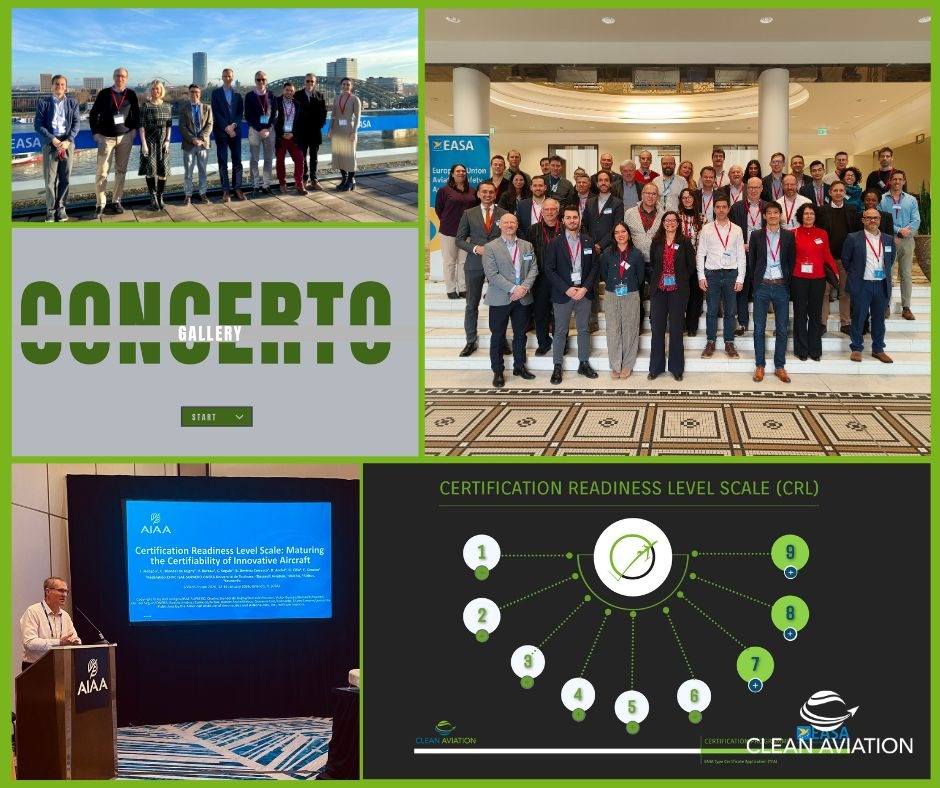
In December 2025, CONCERTO held its final WP5 workshop, followed by an EASA SAB meeting in Cologne. The sessions reviewed the project’s conclusions, demonstrated materials, and proposed roadmaps across the EASA work program. Participants also explored EASA’s current plans for the Certification Platform, including MVP demonstrations and roadmap perspectives.
The project emphasizes the importance of Certification Readiness Levels (CRL). Through workshops and interactive CRL tools, CONCERTO partners and stakeholders learn all stages of certification, discover deliverables and targets, and follow associated processes. The CRL scale provides a technology-agnostic framework that bridges innovation and certification, ensuring safe and efficient adoption of new technologies.
International Knowledge Sharing
CONCERTO partners actively presented their work at international forums, including AIAA SciTech 2026, where Joël Jézégou shared insights on maturing the certifiability of innovative aircraft. Additionally, participation in EASA Clean Aviation workshops facilitated structured discussions on CRL applications, highlighting the value of early engagement with regulatory authorities.
Ongoing Collaboration and Project Monitoring
Online meetings, such as SC#12 & PMC#10, allowed partners to exchange feedback, discuss progress, and prepare for upcoming annual reviews. Contributions from the Clean Aviation Project Officer and other advisors provided strategic guidance, strengthening alignment and ensuring that the project remains on track to meet its objectives.
Looking Ahead
Through these activities, the CONCERTO Project continues to support Europe’s clean aviation vision, combining technological innovation, regulatory readiness, and collaborative learning. With certification readiness, knowledge exchange, and partnership at its core, the project paves the way for safer, greener, and more innovative aircraft in the future.
Stay up-to-date on the exciting developments of CONCERTO by visiting our website and following the project's social media pages on LinkedIn, Χ, YouTube, and Spotify.
The project is supported by the Clean Aviation Joint Undertaking and its members.
Funded by the European Union. Views and opinions expressed are however those of the author(s) only and do not necessarily reflect those of the European Union or Clean Aviation Joint Undertaking. Neither the European Union nor Clean Aviation JU can be held responsible for them.