



Bridging Research: Improving competitiveness and sustainability of long-range air travel with EXAELIA project
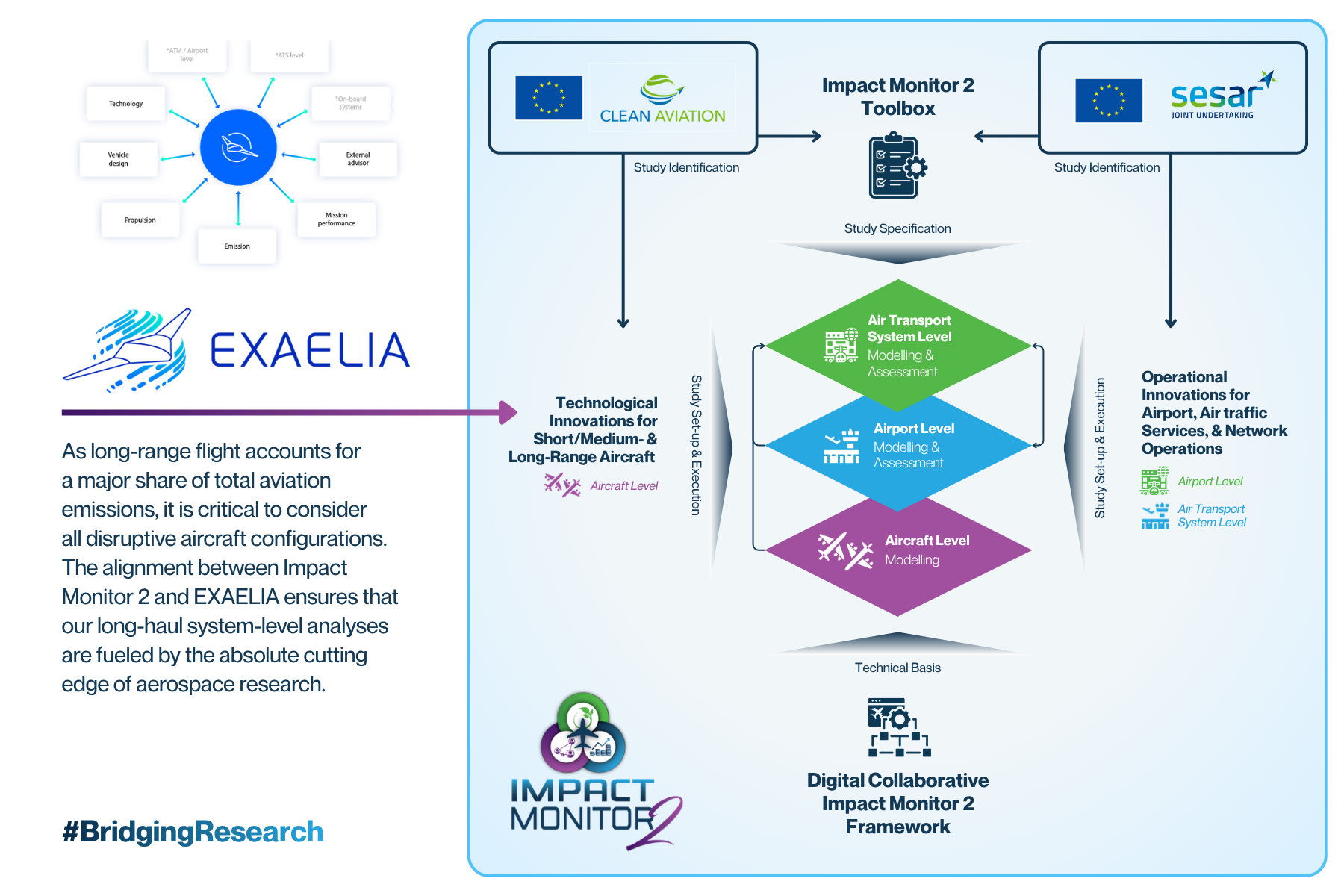
Within Impact Monitor 2, we are implementing a collaborative framework to conduct deep-dive assessment studies extending to the year 2070. The focus is on quantifying the environmental, economic, and societal impacts of future aircraft technologies, including future-generation long-range aircraft concepts with a planned entry into service around 2050. This enables comparative analyses of potential technological developments within air transport, embedded in system-level modelling of the aviation sector.
Because long-range flight accounts for a major share of total aviation emissions, getting the data right and looking at all promising evolutionary and revolutionary aircraft configurations is critical. That is why IM2 is actively aligning with the EXAELIA project. By joining forces, we ensure that our long-haul system-level analyses are fueled by the absolute cutting edge of aerospace research:
- EXAELIA: Provides future long-range aircraft configurations, varying between evolutionary efficiency improvements and hydrogen-powered blended-wing-body architectures.
- Impact Monitor 2: Develops a scenario-based forecasting framework for emissions and climate impact assessment, including global passenger demand, fleet evolution, airport-to-airport operational emissions, and climate-response modelling.
Inside the Framework: Employing Multi-fidelity Modelling to address complex impact assessments
In the world of complex impact assessments, we often face a frustrating trade-off: do we want results fast, or do we want them accurate? Usually, you can’t have both. High-fidelity simulations offer incredible detail but eat up massive computational resources, while simplified models are quick but can miss critical nuances.
Within the Impact Monitor 2 project, we are breaking this deadlock through Multi-Fidelity (MF) Modelling. Building on insights contributed by Claire Sarrat, Thierry Lefebvre, and Harshith Gowrachari (ONERA) at our January 2026 Technical Workshop, this newest article highlights:
- What is Multi-Fidelity Modelling?
- How is MF Modelling applied to an impact assessment study focusing in airport air quality?
- How is this approach extended by incorporating physics-based surrogates?

Impact Monitor 2 Academy: Official Onboarding & Kick-off Meeting
Last July, the three selected Academy participants were officially welcomed in the Impact Monitor 2 team.
Kick-off meeting highlights:
- Brief presentation of the project and the Academy objectives.
- Introduction of the students and their mentors on this journey.
- Overview of the previous IMPACT MONITOR Project Monitor Academy round and the results derived.
- Detailed presentation of each student’s academic background, expectations and motivation to join the Academy, as well as their planned technical work within the project.
We officially welcome aboard Arianna Pasqualone (University of Patras, supervised by Angelos Filippatos), Cloe Mateo (Gannon University, supervised by Jordi Pons), and Melissa Kühnle (ZHAW Zurich University of Applied Sciences, supervised by Michel Guillaume).
Operationalizing the IM2 Framework: Highlights from the Technical Workshop in Hamburg this September
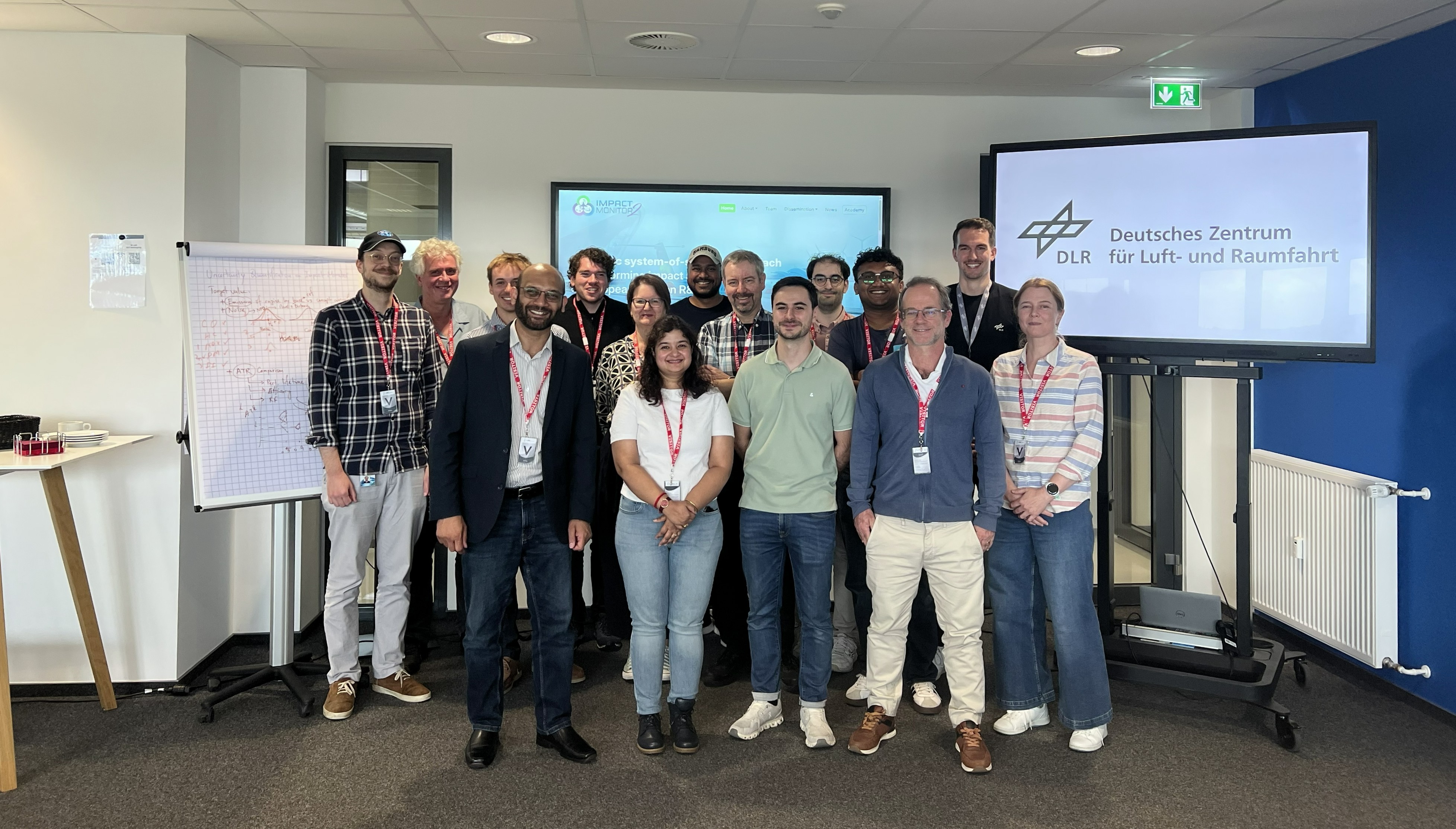
A major step forward has been achieved in applying the Impact Monitor 2 (IM2) Toolbox and Framework to real-world aviation scenarios. The IM2 project team gathered in Hamburg on September 8 & 9, for an intensive two-day Technical Workshop dedicated to transitioning workflow designs into active simulation execution.
Hosted by the DLR Institute of System Architectures in Aeronautics, the workshop brought together partners and technical contributors for hands-on working sessions focused on advancing the project's preliminary impact assessment studies.
The workshop focused on aligning study setups and advancing model integration across both Airport-Level and Air Transport System (ATS)-Level assessment studies. These studies form the core of IM2's mission to evaluate the long-term environmental, economic, and operational impacts of future aircraft technologies and operational procedures.
Participants collaborated across specialized study groups to execute workflows and test the end-to-end analytical capability of the IM2 framework.
Read more here.
Impact Monitor 2 at the 16th EASN International Conference in Toulouse this October
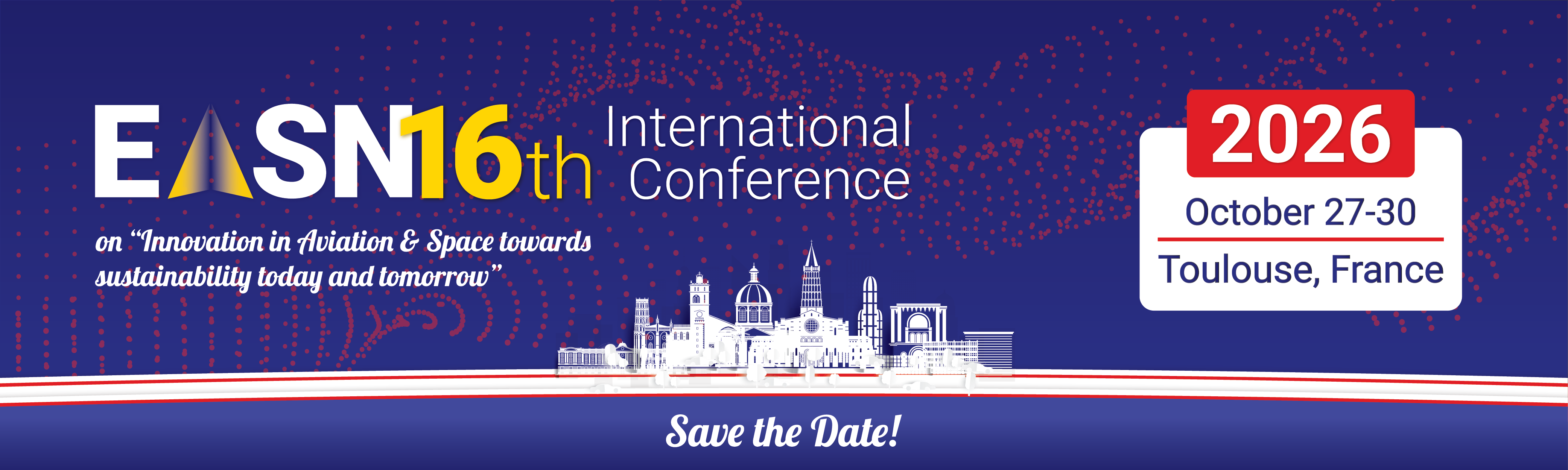
As the aviation sector strives toward ambitious environmental targets and climate neutrality, the ability to accurately quantify the impact of novel technologies and operations in aviation becomes paramount. This year, Impact Monitor 2 project organises an insightful session at the 16th EASN International Conference, entitled "Impact Assessment Studies in Aviation R&I: A Systematic Approach to Evaluating Technological and Operational Innovations."
When? Wednesday, October 28, 2026 (10:30 - 12:30)
Where? Room 05-053
This session is expected to provide a comprehensive deep dive into the Impact Monitor 2 (IM2) methodology—a systematic, multi-fidelity approach designed to evaluate the impact of next-generation aviation solutions and to support key stakeholders in science-based, informed decision-making. It will also guide attendees through the full spectrum of impact assessment, beginning with the strategic context of European aviation R&I and proceeding with a detailed overview of the IM2 Digital Collaborative Framework, illustrating how disparate simulation models are integrated into unified workflows. Participants will gain insights into the aircraft modelling process and the execution of assessment studies at two streams:
- Technology-Focused Studies
- Aircraft Level: Modeling novel aircraft concepts and propulsion systems.
- Airport- and ATS-Level Studies: Assessing the impacts of emerging aircraft technologies across future fleets until 2070.
- Operations-Focused Studies
- ATS-Level Study: Assessing contrail avoidance strategies incorporating uncertainty considerations.
- Airport-Level Study: Assessing the impacts of reduced separation minima on arrival and departure procedures.
Finally, the session will highlight the Impact Monitor 2 Academy, showcasing how academic talent and research are being integrated to foster the next generation of aeronautics experts.
Join our journey on LinkedIn and YouTube, as we work towards a more sustainable and evidence-based aviation future!

Funded by the European Union. Views and opinions expressed are however those of the author(s) only and not necessarily reflect those of the European Union or CINEA. Neither the European Union nor CINEA can be held responsible for them.