



Advancing H2ELIOS towards its final milestones
As H2ELIOS moves through the final phase of the project, consortium partners continue to consolidate the technical progress, knowledge, and results generated throughout the project, while preparing the final activities that will support its long-term impact on future liquid hydrogen (LH₂) technologies for aviation.
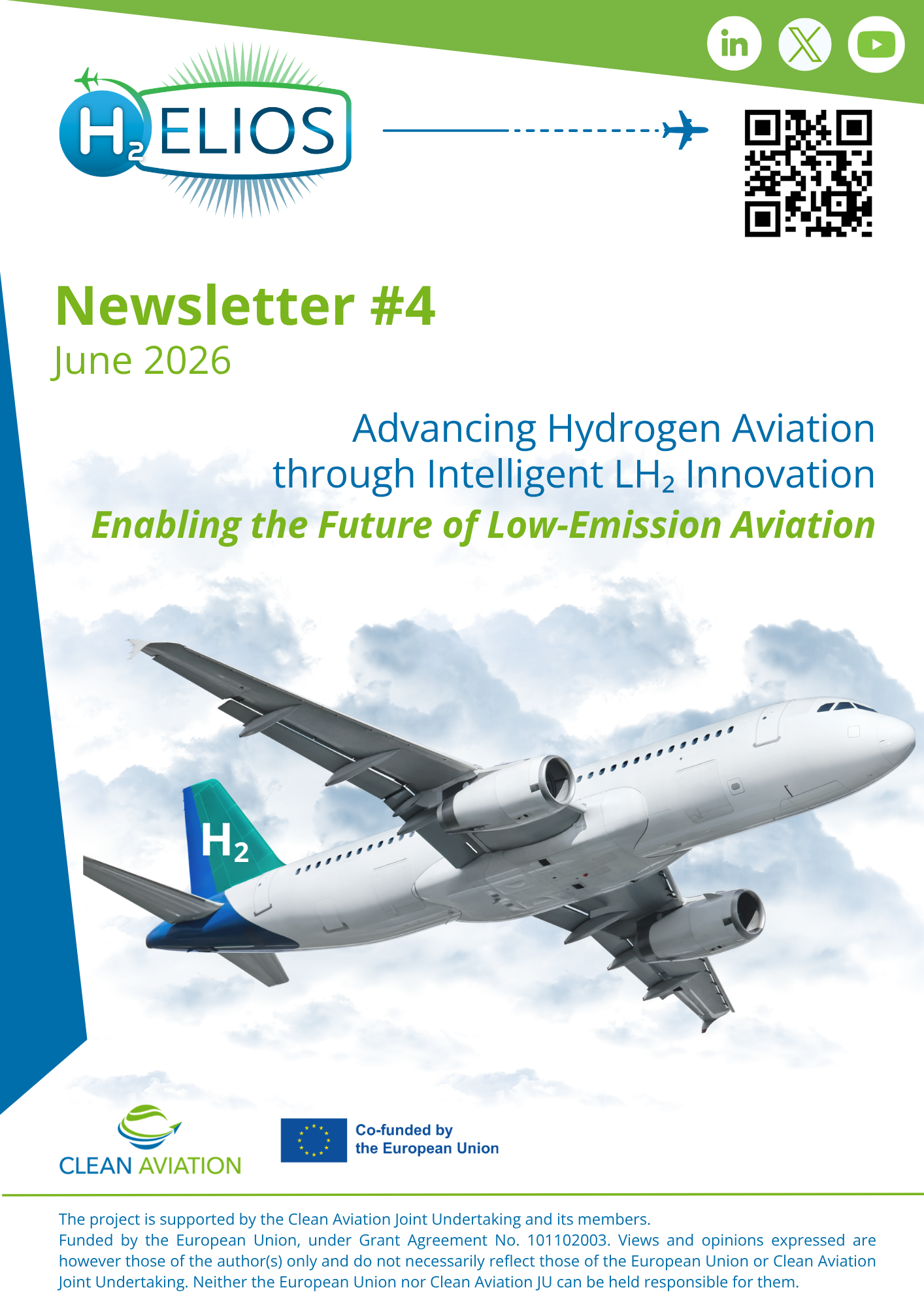
In June 2026, the consortium released H2ELIOS Newsletter #4, under the theme “Advancing Hydrogen Aviation through Intelligent LH₂ Innovation.” The latest issue brings together recent project developments, technical highlights, and communication activities, providing an overview of the progress achieved across the consortium as H2ELIOS advances towards completion.
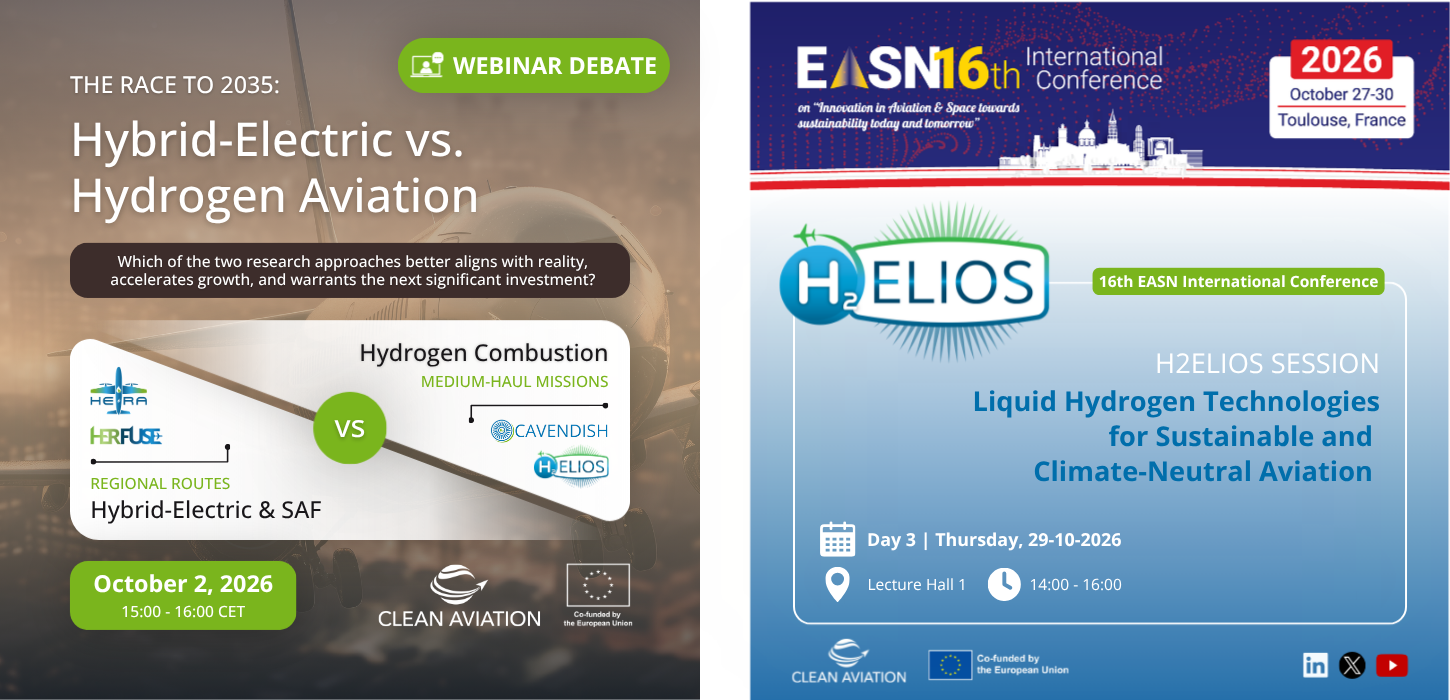
H2ELIOS will also take part in the upcoming webinar debate The Race to 2035: Hybrid-Electric & SAF vs Hydrogen Aviation, taking place on 2 October 2026, from 15:00 to 16:00. Together with HERA, HERFUSE, CAVENDISH and Clean Aviation, the discussion will explore which technology pathways are most likely to shape sustainable aviation by 2035.
Looking ahead, H2ELIOS will be featured at the 16th EASN International Conference, taking place from 27 to 30 October 2026 in Toulouse, France. A dedicated H2ELIOS session, “Liquid Hydrogen Technologies for Sustainable and Climate-Neutral Aviation,” will take place on Thursday, 29 October, from 14:00 to 16:00 in Lecture Hall 1. The session will focus on hydrogen storage technologies for aviation, including technology development, integration, safety, testing, and validation.
Stay connected with H2ELIOS to learn more about the project’s latest activities, technical progress, and upcoming events. Visit the official website and connect with the project on LinkedIn, X, and YouTube.

The project is supported by the Clean Aviation Joint Undertaking and its members.
Funded by the European Union. Views and opinions expressed are however those of the author(s) only and do not necessarily reflect those of the European Union or Clean Aviation Joint Undertaking. Neither the European Union nor Clean Aviation JU can be held responsible for them.