



As the journey toward climate-neutral aviation accelerates, Impact Monitor 2 (IM2) continues to advance the frontier of aviation research. Driving a large-scale, multi-disciplinary European collaboration requires more than just innovative modeling—it demands strategic synergy, absolute transparency, and a commitment to nurturing the next generation of aerospace experts.
Bridging Research: Scaling Climate Impact Assessments with the CLAIM Project
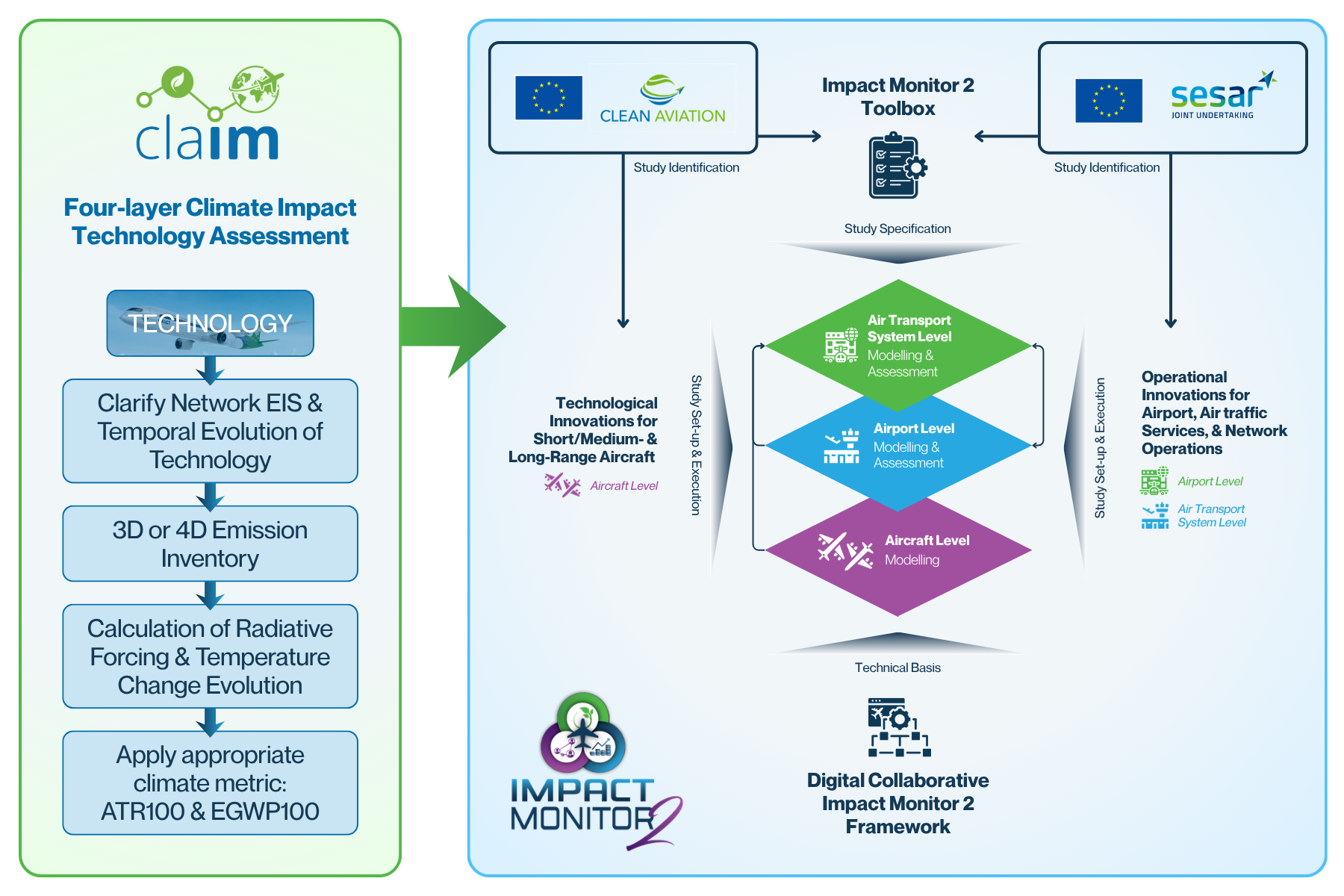
The path to advancing aviation research isn’t built in isolation; it is powered by cross-project collaboration. In a major step forward, IM2 is officially integrating the groundbreaking 4-layer approach for climate impact assessment, originally developed within the CLAIM project.
By adopting this rigorous framework, IM2 is set to conduct preliminary assessments of future technology roadmaps with unprecedented depth. This methodology enables the project to analyze both CO2 and Non-CO2 emissions comprehensively. With an assessment timeline stretching to 2070, this integration ensures that the technologies evaluated today across all relevant market segments are truly fit for the climate goals of tomorrow.
One Vision, One Language: The IM2 Glossary is Live
With diverse stakeholders spanning research, industry, and policy, success depends heavily on clear communication. To ensure all partners are on the same page when discussing complex architectures, we have officially launched the IM2 Glossary on our website.
This resource serves as our project’s "common ground," establishing a unified vocabulary for our framework, assessment studies, and long-term milestones. By harmonizing our definitions, we reduce ambiguity and strengthen the technical backbone of our shared mission. After all, clarity is the first step toward real environmental impact.
Inside the Impact Assessment Framework: Embracing Uncertainty Quantification (UQ)
When modeling the future of aviation up to 2070, reliability is everything. However, every model is built on assumptions, and every numerical method introduces small errors. In a multi-disciplinary project like IM2, these uncertainties can propagate through the modeling chain in ways that are difficult to predict.
To ensure results you can trust, IM2 is actively bringing Uncertainty Quantification (UQ) into play. Building on insights presented by Celine Parzani (ONERA) and Tawfiq Ahmed (DLR) at our January 2026 Technical Workshop, our latest technical focus highlights:
- The Role of UQ: How we identify, measure, and analyze inherent uncertainties during impact assessments.
- Advanced Tooling: The specific UQ platforms being employed across the IM2 technical infrastructure.
- Targeted Application: The exact impact assessment studies where UQ is being deployed to guarantee robust, validated outputs.

Mentoring the Next Generation: IM2 at IFAR Early Career Network (ECN) X Challenge in Montréal
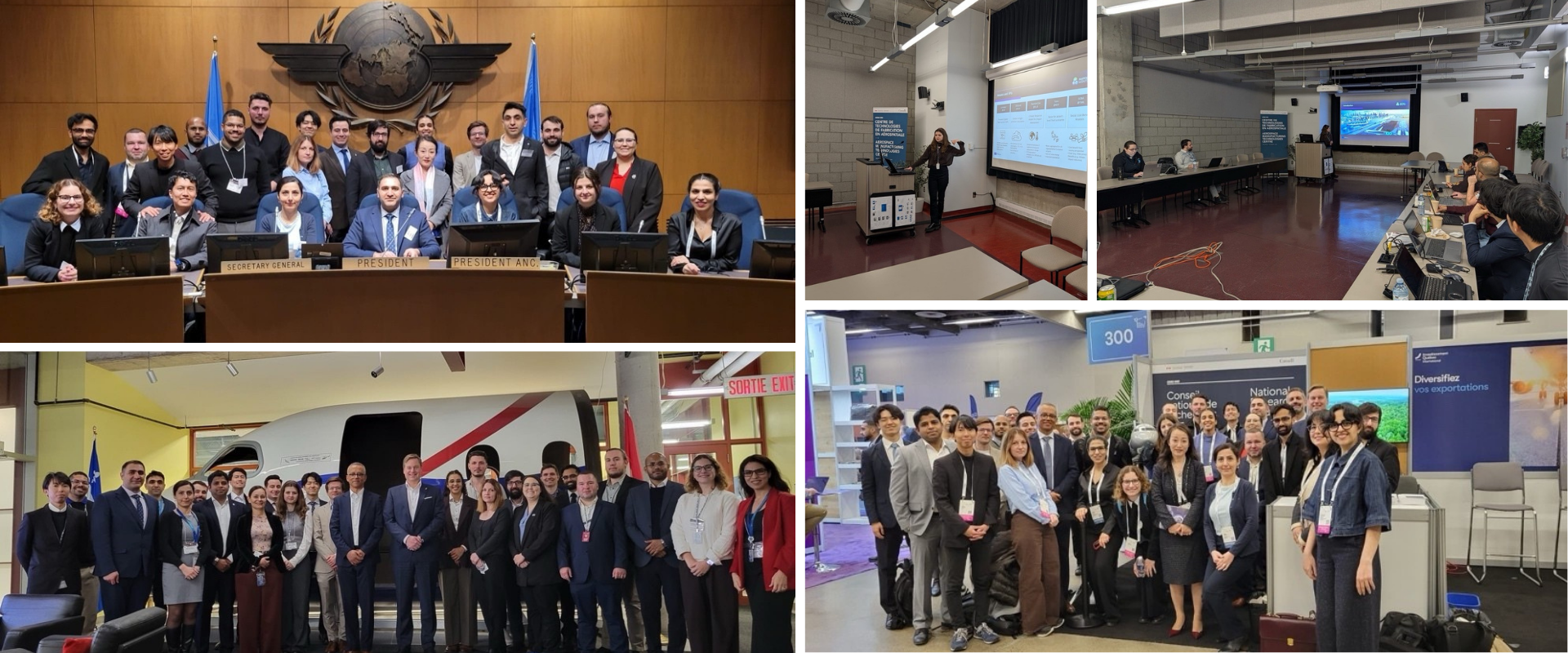
IM2’s methodologies are not just shaping European policy—they are serving as an international blueprint for successful digital collaboration. This was fully on display in Montréal, Canada, where the National Research Council (NRC) hosted the final event of this year's IFAR Early Career Network (ECN) X Challenge.
Representing the IM2 coordinating team from the DLR Institute of System Architectures in Aeronautics, Helen Szöke-Erös (acting as IFAR ECN Chair) and Prajwal Shivaprakasha (acting as Technical Mentor) led 16 young experts from 13 international organizations. They guided participants through the complexities of Digital Cross-Organization Collaboration and Multi-Disciplinary Design and Optimization (MDO)—the foundational pillars of IM2.
By presenting IM2 as a successful case study, our team demonstrated how digital MDO practices turn high-level industry milestones, such as the Flightpath 2050 goals, into actionable reality.
Join our journey on LinkedIn and YouTube, as we work towards a more sustainable and evidence-based aviation future!

Funded by the European Union. Views and opinions expressed are however those of the author(s) only and not necessarily reflect those of the European Union or CINEA. Neither the European Union nor CINEA can be held responsible for them.