



EuReComp: Advancing Circularity for Large Composite Structures
The increasing use of composite materials across sectors such as wind energy, automotive and aerospace has created new challenges related to end-of-life (EoL) management. While composite materials offer outstanding lightweight and mechanical performance, recycling and reusing them remains complex. The EuReComp project was launched to address this challenge by developing practical circular solutions for large composite structures through reuse, repair, repurposing and recycling approaches.
Over its four-year duration, EuReComp brought together research organizations, universities and industrial partners from across Europe to demonstrate how recovered composite materials can be transformed into new high-value applications. The project focused not only on recycling technologies, but also on extending the lifecycle of composite components through innovative design strategies, digital tools and sustainable manufacturing methods.
A key achievement of the project was the development of several real demonstrators validating the feasibility of circular composite solutions.
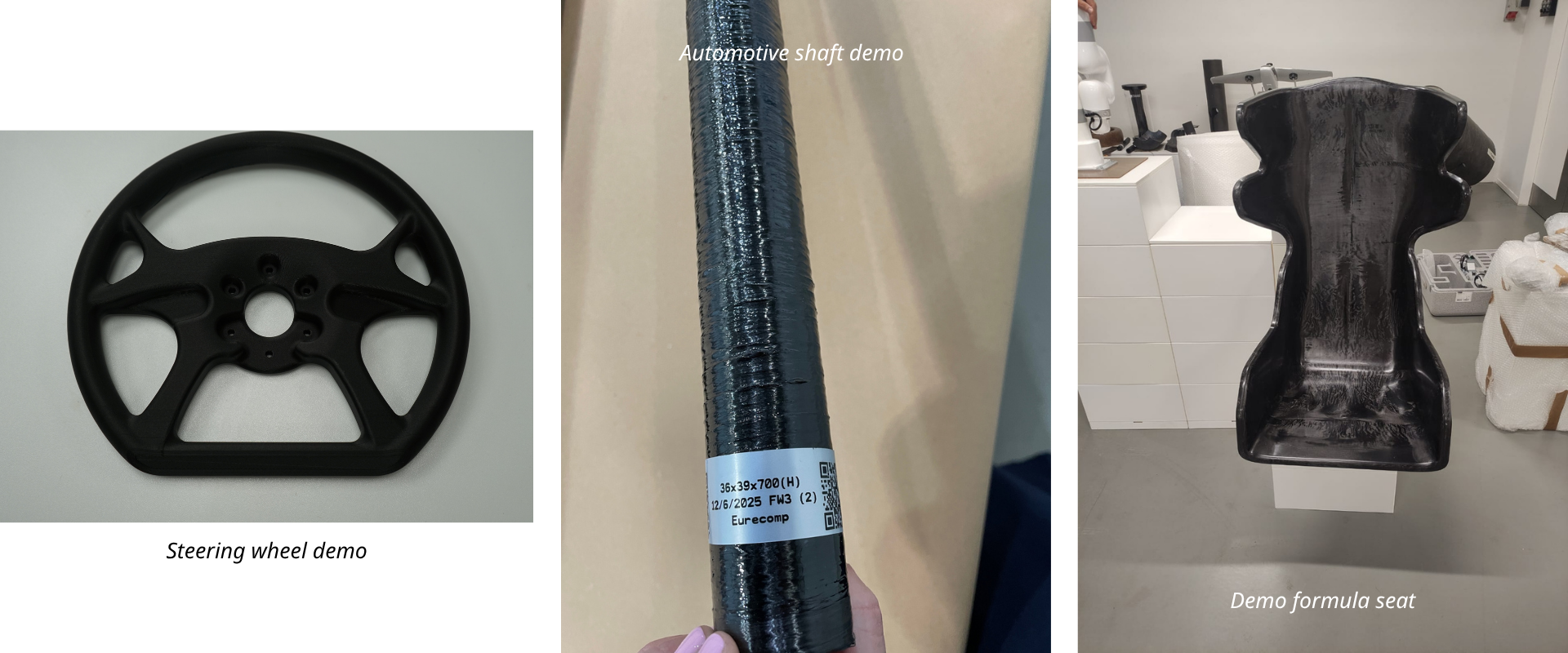
In the automotive sector, EuReComp successfully manufactured a steering wheel using recycled carbon fibre reinforced filament through additive manufacturing, a structural automotive shaft produced with filament winding technique by continuous recovered carbon fibres (closed-loop recycling), and a Formula racing seat manufactured entirely from recycled long carbon fibres. These demonstrators proved that recycled composites can achieve high mechanical performance and be useful for the automotive sector.
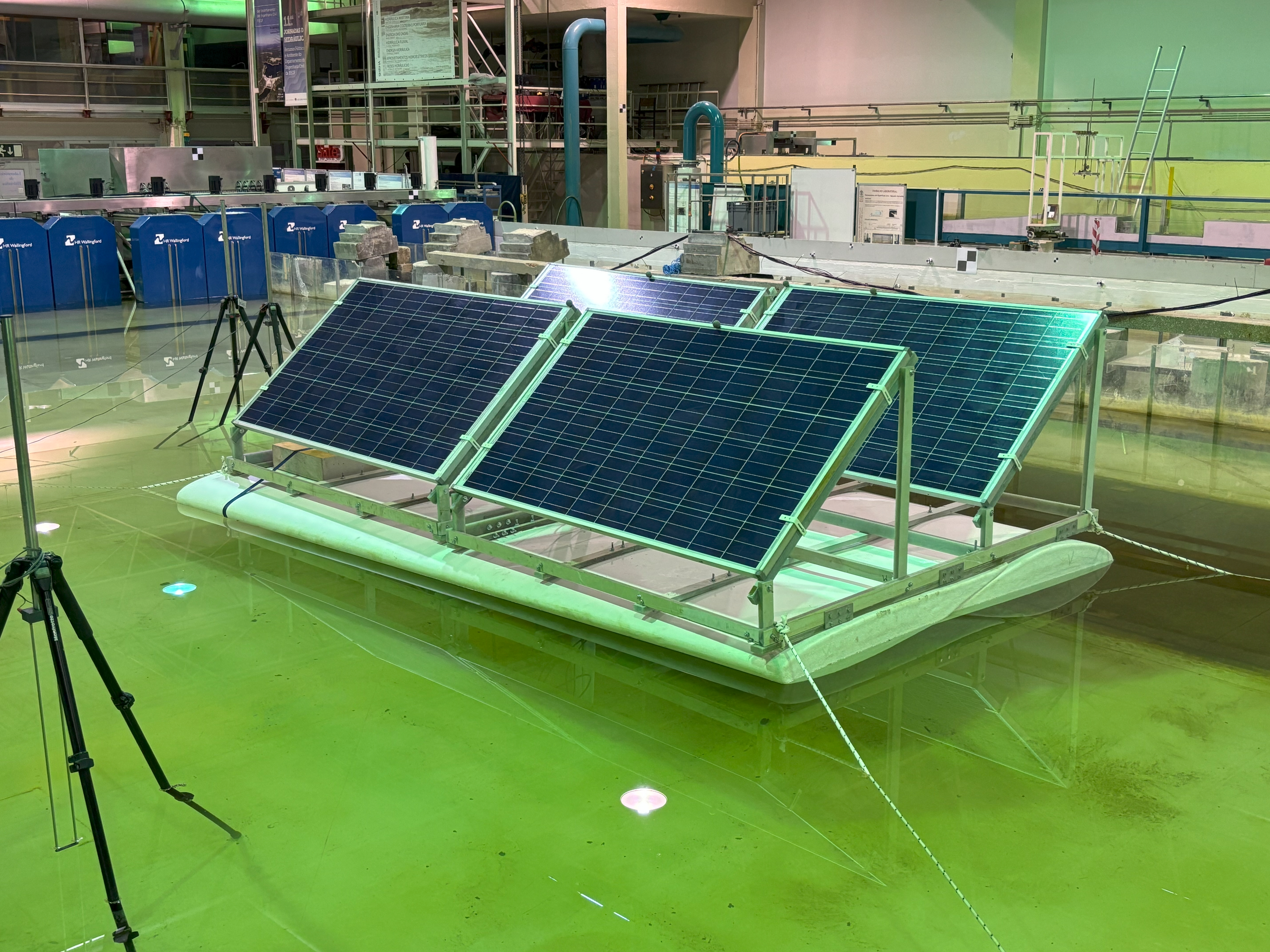
Beyond automotive applications, the project explored innovative repurposing concepts for large composite components. One of the most notable outcomes is the development of a large-scale floating photovoltaic platform using sections from end-of-life (EoL) wind turbine blades as structural floaters.
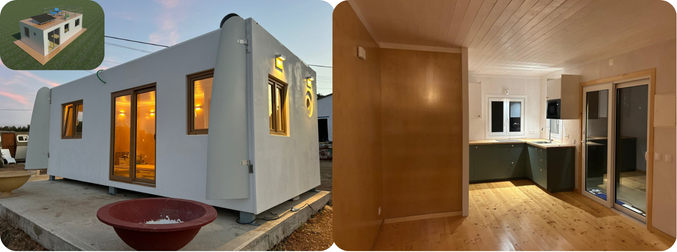
The project also developed the ROCCA demonstrator, a mobile multi-use cabin integrating reused and recycled composite components from wind energy and aviation sectors. Designed for flexible deployment on land or water, ROCCA highlights the architectural and functional potential of circular composite materials in infrastructure applications.
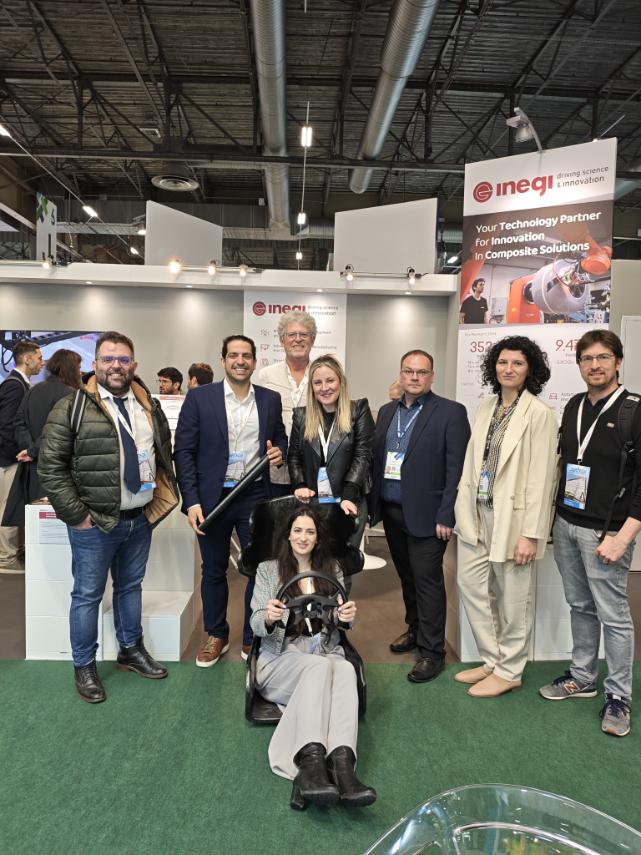
Alongside technical developments, EuReComp invested strongly in dissemination, training and stakeholder engagement. Through workshops, webinars, scientific publications, trade fairs and digital outreach activities, the project engaged research communities, industrial stakeholders, policymakers and the wider public.
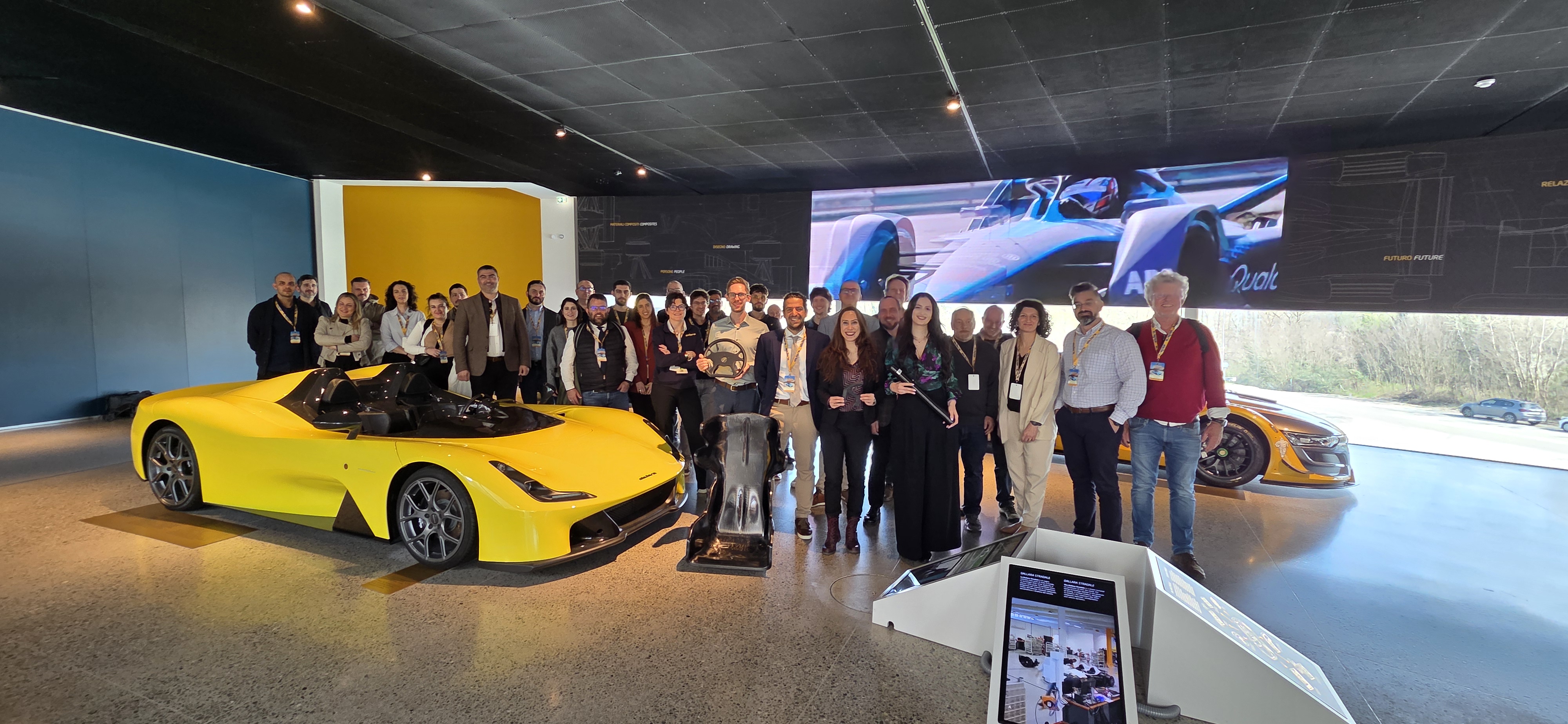
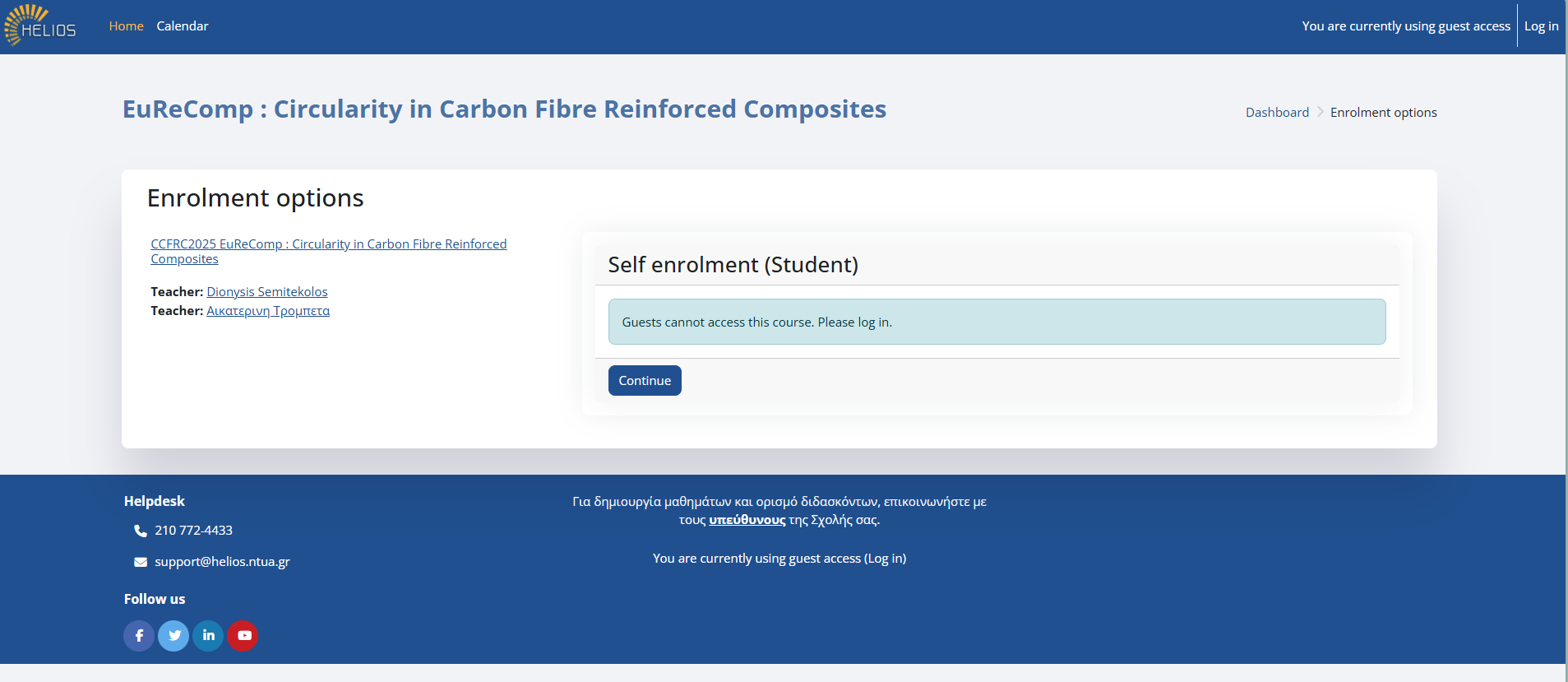
A dedicated Life-Long Learning (LLL) Programme on end-of-life composite management was also developed and made openly accessible online in NTUA’s Helios Platform, ensuring long-term availability of the project knowledge beyond its completion.
As the project concluded in March 2026, EuReComp leaves behind a strong foundation for future circular composite value chains in Europe. The project demonstrates that large composite structures can successfully move beyond the traditional linear lifecycle model (EuReComp Holistic tool) and become part of sustainable, high-value circular systems supporting both industrial competitiveness and environmental goals (EuReComp white papers).

Funded by the European Union. Views and opinions expressed are however those of the author(s) only and not necessarily reflect those of the European Union or HADEA. Neither the European Union nor HADEA can be held responsible for them.