


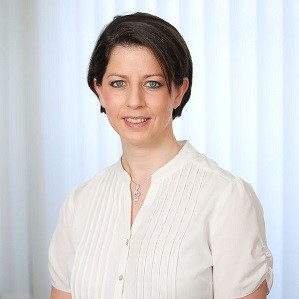
Gioia Venturini is Director for European R&T programs and international R&T cooperation at SAFRAN Group's Directorate for Strategy, R&T and Innovation (DSTI).
She is also member of EASN Association's Stakeholders Advisory Board, member of Luchtvaart in Transitie International Advisory Council, and member of Elles Bougent association, an organization that promotes gender equality in technical sectors and encourages women and young girls to embrace technical careers.
The issue of women’s underrepresentation in STEM (Science, Technology, Engineering, Mathematics) sectors has been tackled for many years. Despite extensive debates and a variety of initiatives designed to enhance the participation of women, results have remained insufficient. The question remains: why does this disparity persist?
The outcomes do not meet expectations. Achieving gender balance in aeronautics—much like the challenge of reducing aviation CO₂ emissions—remains elusive. This sector is not unique in this regard; it reflects a pattern seen throughout technical fields.
At most and far from being a generality, women account for 30% of the workforce in these domains, representing an improvement from historical figures, which plateaued at approximately 15-20%. However, this number falls substantially at the leadership level, where women constitute only 1-5%. This is often rationalized by managers as a result of the proportion of female graduates from technical schools or universities: “We can only hire as many as the system produces.” While this explanation is factually accurate to an extent, it is increasingly viewed as unsatisfactory. It is a convenient rather than an actionable response.
Where are lying in your view the roots resulting to gender imbalance in technical sectors?
Significant research has been conducted to identify the root causes of gender imbalance in technical sectors. Such studies cover a broad range: from university and secondary education environments, to primary education, as well as social, economic, geographical, and organizational levels. The data is both diverse and substantial.
In preparation for this interview , the Scientific Report from the Paris Dauphine PSL-UNESCO Chair for Women and Science of February 2026 was reviewed. This multidisciplinary chair aims to assess the factors influencing the underrepresentation of women in scientific education and careers. The report specifically examines how gender stereotypes and socialization processes impact academic performance, self-confidence, and educational choices. One of the principal conclusions is that the observed discrepancies between girls and boys are not grounded in innate abilities or isolated personal preferences. Rather, they are rooted in specific social and cultural contexts. Representation that associates specific disciplines, such as mathematics or the hard sciences, with masculine identity is formed at a very early stage and reinforced throughout educational progression, exerting a significant, lasting influence on academic and career orientations.
Interestingly, the data reveals that in some of the most developed and ostensibly egalitarian societies, the decline of explicit gender hierarchies has, in some instances, led to a reinvigoration of essentialist beliefs about the “natural aptitudes” of men and women. Thus, while economic and institutional progress can shift norms, it does not necessarily alter their effects, which may continue to shape outcomes indirectly.
Another study analysed over 600,000 evaluations of high school students pursuing scientific degrees (2013–2017), focusing on language used by evaluators. The findings showed that behavioural assessments for female students used positive descriptors such as “serious,” “focused,” and “disciplined,” whereas for male students, terms like “immature” were more frequent. Conversely, male students were more often described in terms of “talent” and “potential,” while females were associated with “weaknesses” and “shortcomings” when addressing competencies. This linguistic pattern reinforces perceptions that boys possess “natural” ability, while girls must exert more effort to achieve, particularly in fields such as mathematics and physics. Over time, such biases undermine self-esteem, aspirations, and the projection of women into scientific careers, beginning in primary education and persisting into professional evaluations.
At the university level, another analysis revealed that scientific articles authored by women require, on average, up to ten weeks longer to be accepted for publication in academic journals than those by men. This was demonstrated in a large-scale study of roughly 6,000 articles published between 1963 and 2024—a clear indicator of the persistent gender gap in recognition and advancement.
The volume of research and published recommendations on this topic is extensive and well-documented, but efforts need to be pursued to contribute measurable data on these topics, especially when specifically addressing aeronautics. It is now beyond dispute that gender imbalance and underrepresentation of women are systemic issues—rooted in social, economic, educational, and organizational frameworks, not biology. Inequities begin at primary school, evolving through careers under the combined effects of unspoken norms, institutional structures, and life events insufficiently addressed by organizations.
Which are the actions taken to address this challenge? And, in addition, are these actions satisfactory and sufficient?
Just picking one example, the European Commission, recognizing this challenge, has very recently launched an Action Plan for Women in research, innovation, and startups, soliciting evidence on barriers such as underrepresentation, bias, challenges facing diverse groups, and potential solutions to foster equality, diversity, and inclusion. However, this action plan will only tackle the consequences of women underrepresentation, not the root causes as women integrating research, innovation and startups today are the “product” of the present educational and social systems, with all the biases being already integrated.
Furthermore, emerging technologies introduce additional complexities. The rapid development of artificial intelligence has begun to expose new avenues for bias: algorithms, reflecting existing data and social realities, risk reinforcing or amplifying gender bias, notably in recruitment and educational guidance. Vigilance is required to ensure these technologies do not undermine prior progress toward gender balance in STEM.
To conclude: where are lying in your view the principal obstacles for pursuing the changes needed? What is missing?
In conclusion, the fundamental causes of women’s underrepresentation in aeronautics and scientific fields more broadly are clear and well-evidenced, though further research is needed and welcomed. Effective strategies have been identified and proposed (like female quotas, female preference for same competencies in selection procedures, feminization policies in companies and administrations, …) but still need to adapt to emerging technologies that may perpetuate and intensify past and present biased social patterns. The key question is now one of resolve: are decision makers willing to pursue change? Where determination exists, change can occur—just as ambitious goals are set and advanced for challenges such as emission free aviation. Moving forward demands the same conviction to address gender disparity. The time for postponement has passed: it is a matter of actionable choices. Much like the imperative facing aviation in the realm of climate impact, the time has come to transition from deliberation to demonstrable action.
Join the Shift
This conversation is only the beginning of a much larger mission. We invite you to continue the dialogue at our upcoming discussion panel during the 16th EASN International Conference, where we will assemble leading voices to map out a more gender-inclusive future for global aerospace.