



People, Progress and Outreach Driving Circular Composites
Since EuReComp has reached its completion, it has delivered impactful results advancing circular solutions for large composite components. Particularly, validated demonstrators and capacity-building initiatives clearly showcase the technical feasibility, environmental benefits and market potential of innovative recycling, repurposing and reuse strategies.
Below you can have a glimpse of what took place in the last six months.
Team Spotlights: The People Behind EuReComp
The success of EuReComp is driven by the expertise and dedication of its multidisciplinary team.
Robert Böhm, Professor of Composite Lightweight Engineering at HTWK Leipzig, contributes over 25 years of experience in composite materials. Within EuReComp he plays a key role in aligning research with industry and policy needs, supporting the development of circularity strategies, eco-design settings and digital material tracking frameworks. His work also helped establish the Composite Circularity Lab at HTWK Leipzig, a lasting outcome of the project.
Chiara Pernechele, Senior Material Science Engineer at Dallara, brings expertise in multifunctional composite materials and sustainable design. In EuReComp she leads the design of advanced demonstrators for high-performance applications, exploring how recycled fibres and thermoplastic materials can enable scalable and sustainable composite solutions.
Francisco Lahuerta Calahorra at ITA – Instituto Tecnológico de Aragón, contributes his expertise in industrial engineering and material reuse. His work focuses on developing repair, reuse and repurpose pathways for composite parts, including innovative 3D-printed repair techniques that support the transition toward circular composite value chains.
Nikolina Poranek from the Silesian University of Technology applies life-cycle assessment and socio-economic analysis to evaluate emerging recycling routes for carbon fibre composites. Her work helps identify environmental trade-offs and guide decision-making for sustainable technologies.
Presence at Key International Events
EuReComp continues to strengthen its visibility across the European and global composites community.
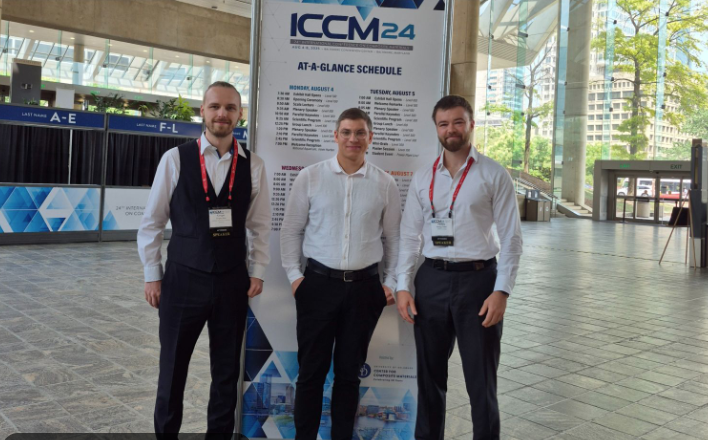
At the International Conference on Composite Materials in Baltimore, project partners from HTWK Leipzig presented research on the sustainable reuse and recycling of end-of-life wind turbine blade components.
The project was also showcased at K Messe in Düsseldorf, the world’s leading trade fair for plastics and rubber. Represented by B&T Composites, EuReComp engaged with industry professionals and innovation stakeholders, highlighting its integrated approach combining reuse, repurposing and recycling strategies.
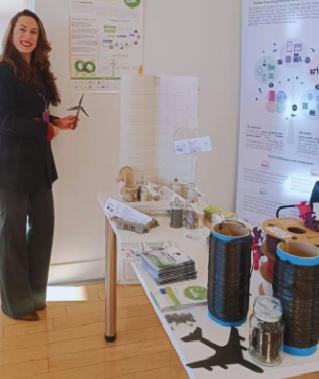
In Athens, the project participated in CORE Innovation Days, where the coordination team from the National Technical University of Athens presented material samples and demonstrators while discussing circular solutions for large composite structures with research and industry stakeholders.
Research and Innovation Highlights
A major research outcome explores the repurposing of end-of-life wind turbine blade components into floating photovoltaic structures. This innovative concept demonstrates how large composite parts can gain a second life while supporting renewable energy infrastructure and circular economy objectives.
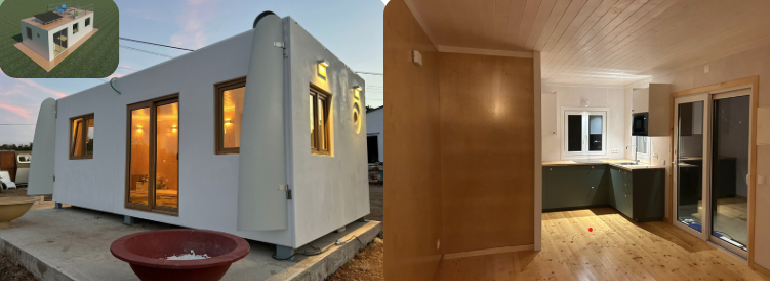
Another key achievement is the ROCCA demonstrator, a multi-use mobile cabin manufactured using recycled and reused composite materials. Integrating components from end-of-life wind turbine blades and other composite sources, the structure incorporates approximately 676 kg of reused composite materials. Designed for flexible deployment on land or water, ROCCA demonstrates how circular composites can be applied in functional, high-value infrastructure solutions.
Digital Outreach and Knowledge Sharing
Knowledge dissemination remains a central pillar of the project. Recent online events include the 7th EuReComp Webinar, where Matteo Fasano from the Politecnico di Torino presented research on atomistic modelling for predicting composite behavior and recycling processes.
The 8th EuReComp Webinar focused on the repurposing of wind turbine blades into floating PV systems, presented by Robert Böhm (HTWK) and Andreia Araújo (INEGI).
These sessions support knowledge exchange across academia and industry while promoting innovative circular solutions.
Towards the Final Phase of EuReComp
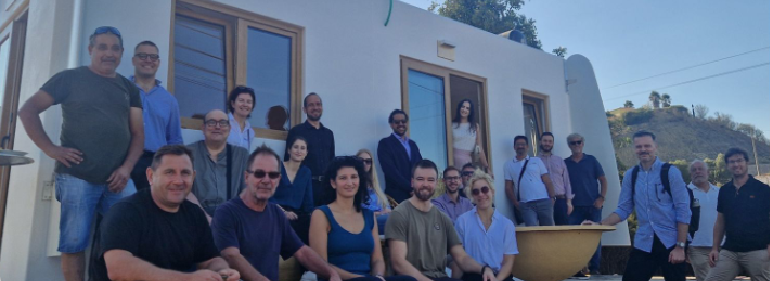
As the project approaches completion, the consortium gathered for the 42-month progress meeting in Lagos, Portugal, hosted by Anthony Patrick & Murta - Exportação Lda. The meeting provided an opportunity to review progress, align the final milestones and prepare for the project’s closing activities.
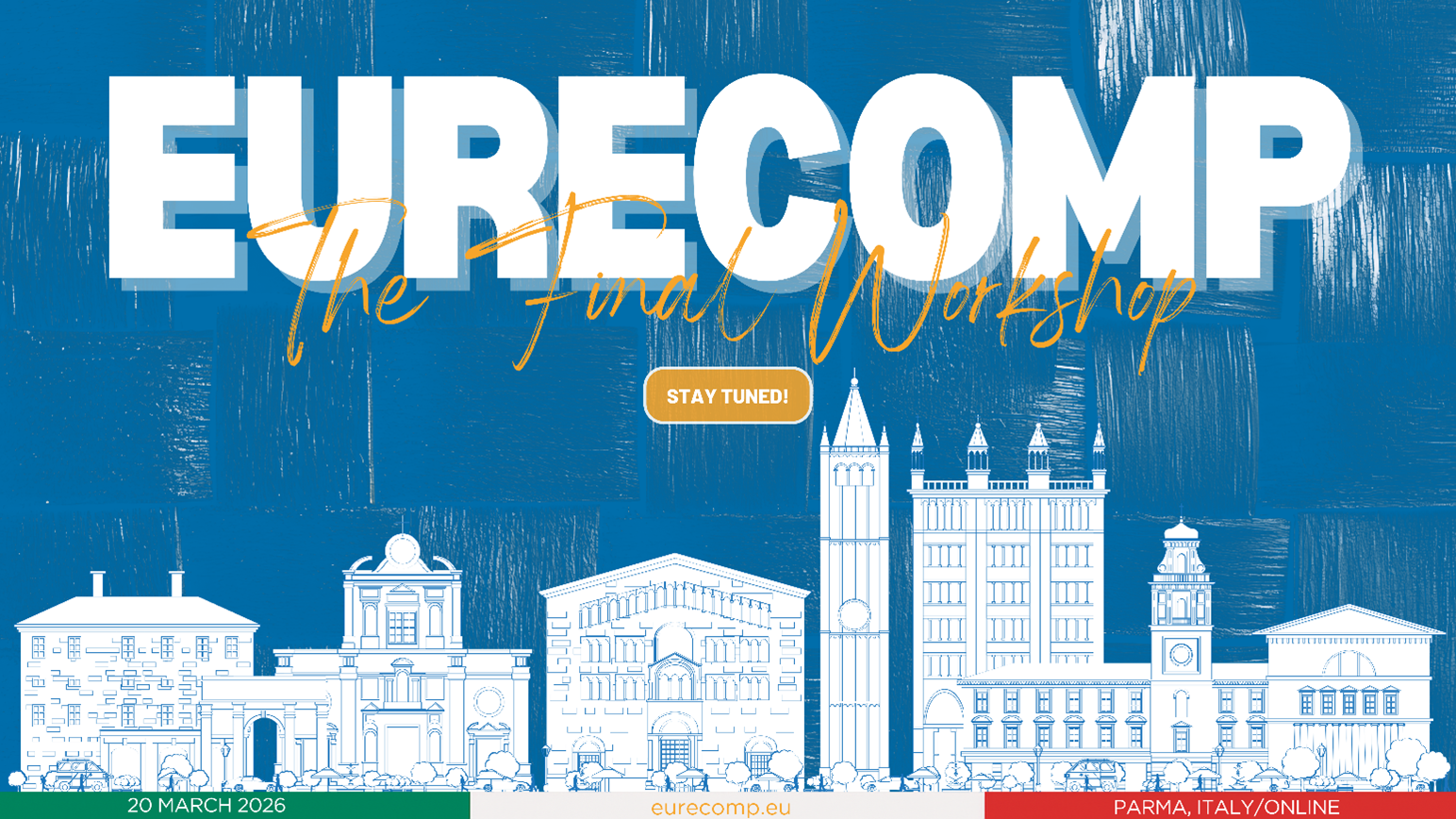
The journey will be completed with the Final EuReComp Open Workshop, taking place on 20th March 2026 at Dallara in Varano de’ Melegari, Italy. The event will bring together researchers, industry representatives and policymakers to present project results and discuss the future of circularity in composite materials.
Looking Ahead
As the EuReComp project approaches its conclusion in March 2026, the consortium continues to consolidate its results and prepare the final steps of this collaborative journey.
In the next newsletter edition, we will present the project demonstrators in detail, highlighting how circular composite solutions have been successfully implemented across different application sectors. We will also share insights from the final activities of the consortium, including the closing workshop and the project’s key outcomes.
Stay connected as we move toward the final chapter of EuReComp and celebrate the achievements of this remarkable collaboration.

Funded by the European Union. Views and opinions expressed are however those of the author(s) only and not necessarily reflect those of the European Union or HADEA. Neither the European Union nor HADEA can be held responsible for them.